
GLOBIOM: From farm technologies to European-scale transition pathways
What happens when farm-level technologies meet European agricultural markets?
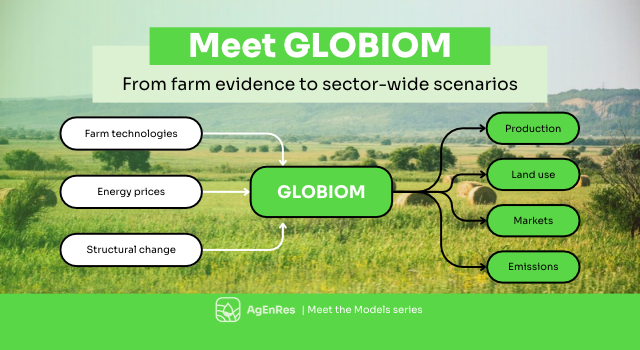
A technology may look promising at farm level. An energy-price shock may look important in an energy-system model. A change in farm structure may seem relevant in a regional model. But for policy and scenario analysis, the key question is often different: What do these changes mean once they interact with production, land use, trade, prices, emissions and energy dependence across the agricultural sector? This is where GLOBIOM enters the AgEnRes modelling toolbox:
GLOBIOM is a recursive-dynamic partial-equilibrium model representing agriculture, forestry, bioenergy, land use, trade and market feedbacks. Its supply representation combines land resources, crop and livestock activities, management systems, costs, yields, emissions and technology options.
In AgEnRes, GLOBIOM is being improved to better represent fossil-energy-relevant cost components in agriculture and to assess how fossil-energy dependence may evolve under alternative energy-price, technology and policy pathways. In simple terms, GLOBIOM turns detailed evidence on farm technologies, energy prices and structural change, into sector-wide scenarios for European agriculture.
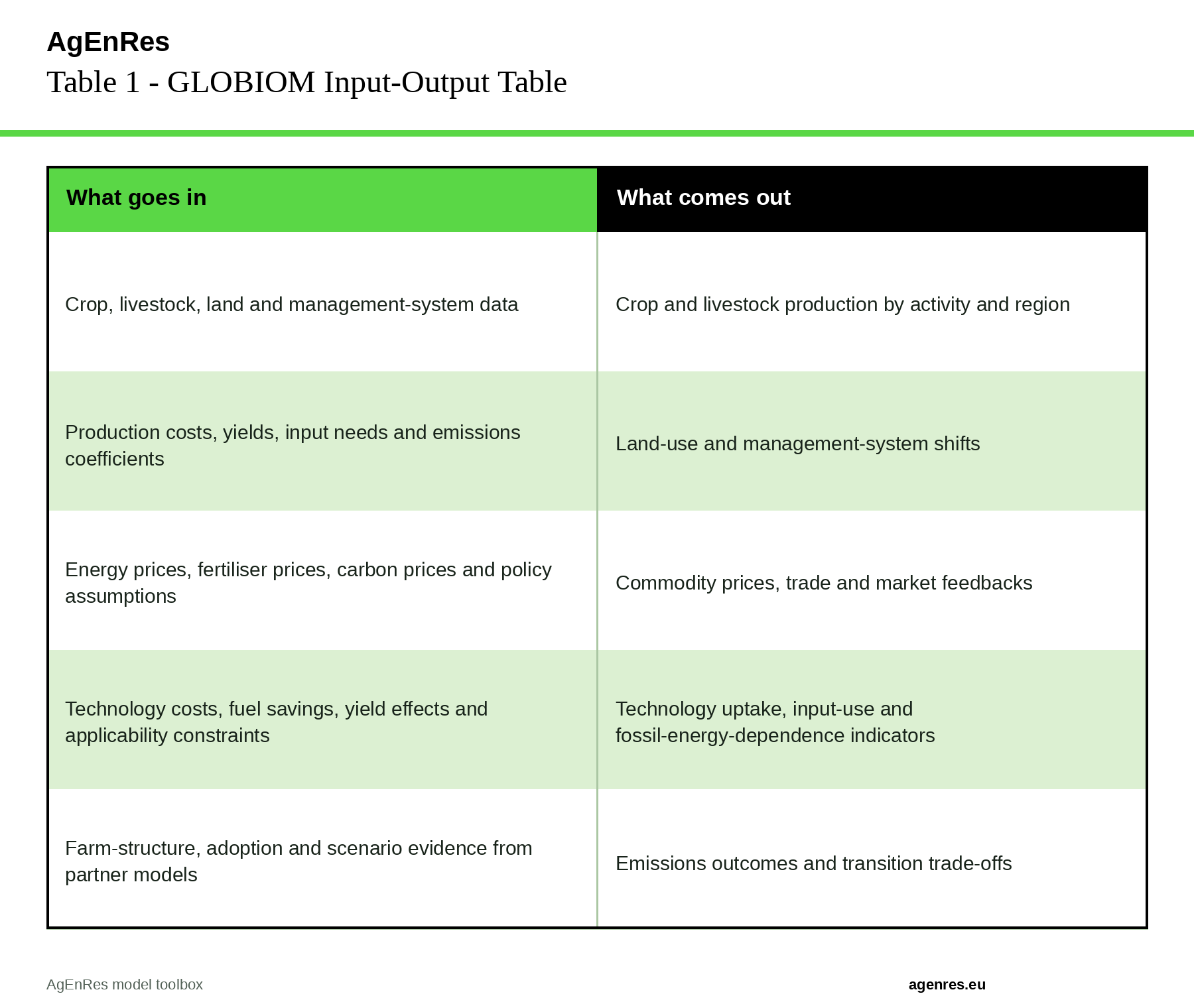
But AgEnRes is not built around one single model. It brings together models working at different scales, because energy dependence in agriculture cannot be understood from one perspective alone. Farm-level models can describe technologies and farm decisions. Regional models can explore structural change and interactions between farms. Energy-system models can provide assumptions on energy prices and energy mixes. But these elements still need to be translated into sector-wide scenarios. GLOBIOM is the bridge between them. Its task is to take evidence from the AgEnRes modelling chain and test what it means for wider agricultural systems, including potential effects on:
- crop and livestock production
- land-use and management-system shifts
- commodity prices and trade
- technology uptake
- input use and fossil-energy-dependence indicators
- emissions and transition trade-offs
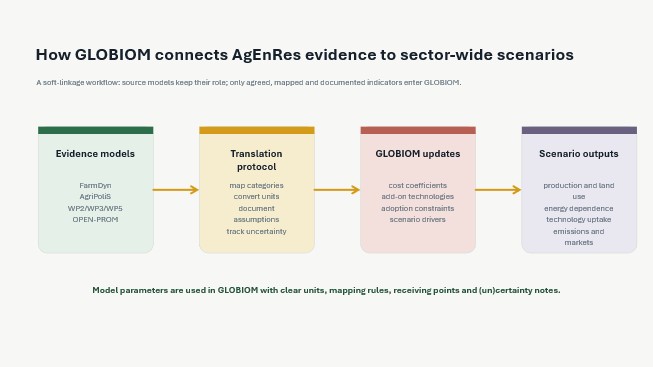
Figure 1- GLOBIOM's soft-linkage in the AgEnRes Toolbox
In AgEnRes, GLOBIOM can draw on several types of evidence, with major links to the other models in the AgEnRes modelling toolbox:
From FarmDyn, it can receive technology costs and cost changes relative to a baseline, including possible changes in diesel use, fertiliser use, labour, yields and emissions. These can be translated into add-on technology parameters, cost shifters and sensitivity tests.
From AgriPoliS, it can receive evidence on farm classes, specialisation, management intensity, farm size, area and production share changes, and adoption potential. These can inform management-system mapping, adoption ceilings, structural-change scenarios and plausibility ranges.
From OPEN-PROM, it can receive energy prices, energy mixes and scenario harmonisation inputs, which can be used as drivers for energy-cost exposure and energy-transition pathways.
This is a soft linkage rather than a forced full-model coupling. Each model keeps its own strengths, while selected outputs are translated into GLOBIOM-compatible parameters, constraints, cost changes and scenario drivers.
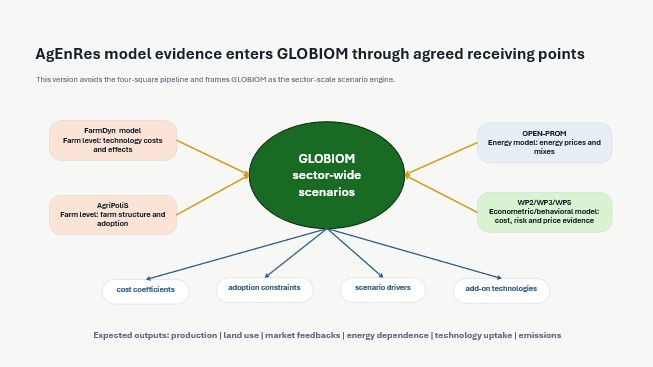
Figure 2- GLOBIOM connections and outputs
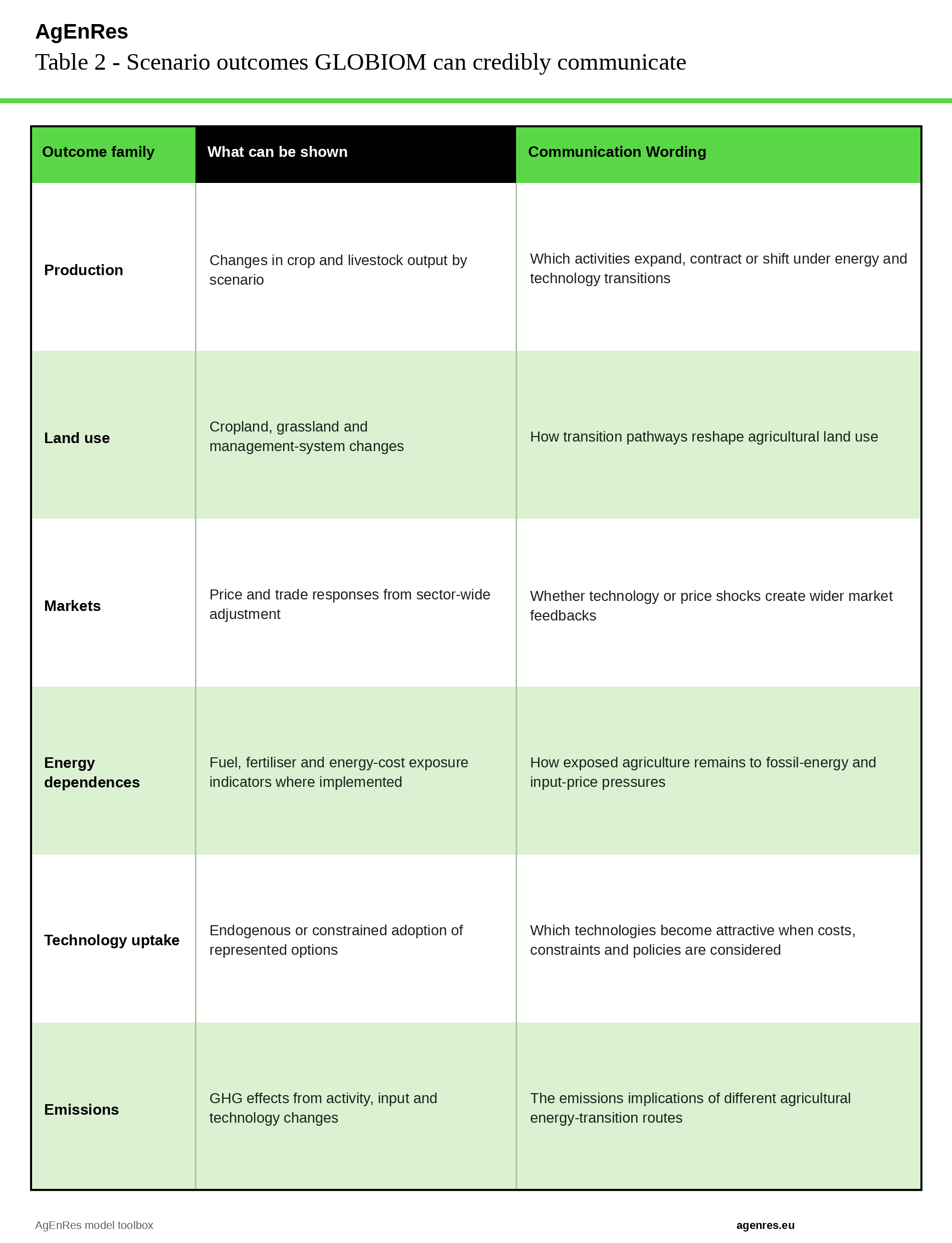
GLOBIOM can then quantify how scenarios affect agricultural systems at sector scale. The model can show changes in crop and livestock production, shifts in cropland, grassland and management systems, price and trade responses, technology uptake, fossil-energy-dependence indicators and emissions outcomes. This allows AgEnRes to explore questions such as:
- How do fuel, energy and fertiliser price changes affect agricultural production, land use, trade, markets and emissions?
- Which energy-saving or input-saving technologies matter at sector scale once costs, adoption limits and market feedbacks are considered?
- How do different assumptions about technology uptake and farm structural change alter the speed and consequences of the agricultural energy transition?
One practical test case in AgEnRes is to assess whether selected fuel-saving and input-saving technologies can reduce European agriculture’s fossil-energy exposure without creating major production, land-use or market trade-offs. The first operational test may focus on no-till versus tillage and efficient harvesting machinery, with precision fertilisation as an additional candidate if the parameter package is sufficiently clear. FarmDyn can provide technology costs and likely physical changes, such as diesel, fertiliser, labour, yield and emissions effects. GLOBIOM can then use these as add-on technology parameters, cost shifters or scenario assumptions, and assess the wider consequences for production, land use, prices, energy dependence and emissions.
GLOBIOM helps test whether farm-level or regional evidence remains robust when scaled into a sector-wide modelling context. A technology that looks attractive at farm level may create wider market effects. A fossil-energy shock may affect production differently depending on land-use constraints, trade responses or technology adoption limits.
As one of the lead researchers puts it:
“GLOBIOM contributes to AgEnRes by moving from evidence about individual farms and technologies to an EU-scale view of production, land use, markets, energy dependence and emissions.”
This makes GLOBIOM central to the project’s ambition to bridge the micro-macro gap and explore how European agriculture could respond to energy-price shocks, technology uptake and climate-policy pathways. Put simply: Farm and energy models describe the pieces. GLOBIOM tests what happens when the pieces interact at scale.